


Cocoa Processing
The fruits of the cocoa tree are oval-shaped. Ranging from 8 to 14 inches long they grow directly from the trunk and main branches of the tree and maybe yellow, green, red or orange in colour. It takes about 5-6 months for the pods to grow and ripen. The cocoa beans are actually the seed inside the pods and are covered with a white coating that conatins the sugars necessary of fermentation.
Farmers harvest the ripe pods by picking the pods with a cocoa knife and then they are split opened (or cracked) with a cutlass and the beans placed into plastic buckets or jute sacks. The beans are then brought to buying points where they are sold.
The raw (fresh) cocoa beans are placed into a sifter where any debris including damaged beans, bits of pods, leaves, stones are removed. The beans are then weighed and placed into big wooden bins called sweat or fermenting boxes. They are covered with banana leaves and jute bags to contain the moisture and heat that is produced during fermentation. The beans remain in the boxes for seven to eight days and are turned every two days into another box. During fermentation flavour develops, bitterness subsides and the seeds turn a rich shade of brown.


Once fermented the beans are sun-dried, for six to seven days, on trays that are on wheels. Whenever it rains or at the close of the working day, the trays are pushed in. During the drying period, workers walk through the beans every half an hour. This action loosens beans that may have become stuck together as well as allow the air to go through the beans to allow for quick drying.
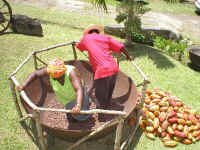
After drying the beans undergo a cosmetic process called polishing. This removes dried residual pulp on the outside of the bean and gives the beans a smooth, brown shiny surface. Traditionally, the beans were polished in large copper pots. They were wet very lightly with water and they were danced upon. This process, similar to tramping grapes is called "dancin the cocoa". Today however the process has been mechanized and the polishing is done inside a big drum that has a grid at the bottom, through which hot air is blown; and rotating paddles that stir the beans in more or less the same manner in which the feet would have done in the past.


The beans are then graded and bagged for export.