| |
Cocoa, Chocolate and Spices |
| |
Grenada has earned its name as the Isle of Spice and The
Spice of the Caribbean because of the extensive selection
of spices grown on the island. Being the world's second
largest producer of nutmegs, this precious spice
naturally tops the list of fragrant spices produced here.
The exotic spice array includes cinnamon, pimento, cloves,
bay leaves, turmeric, ginger, and mace, and all are grown
at Belmont Estate. Nutmegs and mace are exported and are
used extensively for culinary and pharmaceutical purposes.
Locally they are both used as food flavourings, and
seasonings, while the pericarp (fruit ) is used for
making jams, jellies, syrups, juices and candy. A local
company, Noelville Ltd. uses nutmeg oils to manufacture
the now world famous Nut-MedT, a proven formula for joint
and muscle pain relief. |
| |
Prior to hurricane Ivan, nutmegs and mace were the number
one agricultural products grown on the estate. Nutmeg
production has decreased by about 75 percent since then.
Cooca, has now replaced nutmegs as our number one
agricultural product. The cocoa adventure at Belmont
begins with a visit to the cocoa fields where the
captivating story of the transformation of raw cocoa beans
into a delicate product that is used for making chocolate
unfolds. |
| |
Cocoa is harvested by sniping the colourful oval shaped
pods off the trees using mitten-shaped knives (called
cocoa knives). The pods are heaped into piles, then
cracked with a cutlass or machete and the white beans
(seeds) are removed and placed into buckets or bags for
transportation to the fermentation point. There the beans
are placed into a sifter where excess water is drained out
and debris (leaves, stones, broken pods etc.,) are
removed. The beans are then weighed and placed in large
wooden bins (fermenting boxes), covered with banana leaves
and jute bags. The beans remain in boxes for 7-8 days
during which time fermentation takes place. During
fermentation the white substance covering the beans,
disappears; the beans turn a rich shade of brown and
flavour develops. The beans are turned from one box into
another every two days to allow an even distribution of
the heat that is produced during fermentation. Once
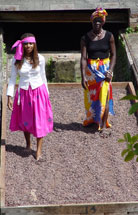
fermented the beans are placed outside to dry in the sun
on big wooden trays, for six to seven days. During that
period workers walk through the beans to allow air to flow
evenly through the beans, to aid with the drying. The
beans then go through a cosmetic process called polishing. Traditionally, beans were polishing by dancing on them
in large copper pots. Polishing removes any dried pulp
residue on the seed, and gives the bean a smooth, polished
look. Polishing is done by commercial polishers. Belmont Estate has forged a strategic alliance with the The Grenada Chocolate Company, to make the world's finest
dark organic chocolate. The Grenada Chocolate Company and
Belmont Estate are a members of the Grenada Organic Cocoa
Farmers Co-operative Society Ltd., that grow organic cocoa
to make the product. The co-operative consists of about
twelve farmers that have received organic certification
through the German certifying company Ceres. |
| |
Belmont Estate is a member of the Grenada Organic Cocoa Farmers’ Co-operative Society Ltd., a co-operative of organic farmers that supply cocoa beans to the Grenada Chocolate Company for making the dark organic chocolate. The story of cocoa is brought to life as the guides explain and demonstrate the traditional and modern methods of fermenting, drying and polishing the beans, by walking in drying trays and dancing in old copper pots. Guests are shown a video entitled "Cocoa - Food of the
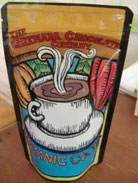
Gods, From the Field to Chocolate " and can sample
Belmont's "cocoa tea" (local hot chocolate) as they allow
the fine bouquet of fermenting cocoa beans and the aroma
of nutmegs, cloves, bay, pimento and other local spices to
permeate their senses.. |
 |
|
|
|